What actually happens inside my unit during a riser project?
Who pays, usually: The association usually pays for the shared pipe, while restoring finishes, tile and upgrades depends on the contract and your declaration, so get those terms in writing before work starts.
Filed under Probably the association's
A riser replacement in a condo unit commonly means opened walls near your kitchen and bathrooms, planned water shutoffs, new pipe and valves, then patching, with the finish work set by your building's own terms.
From the Whose Pipe Is It? desk. Sources last checked November 3, 2026. .
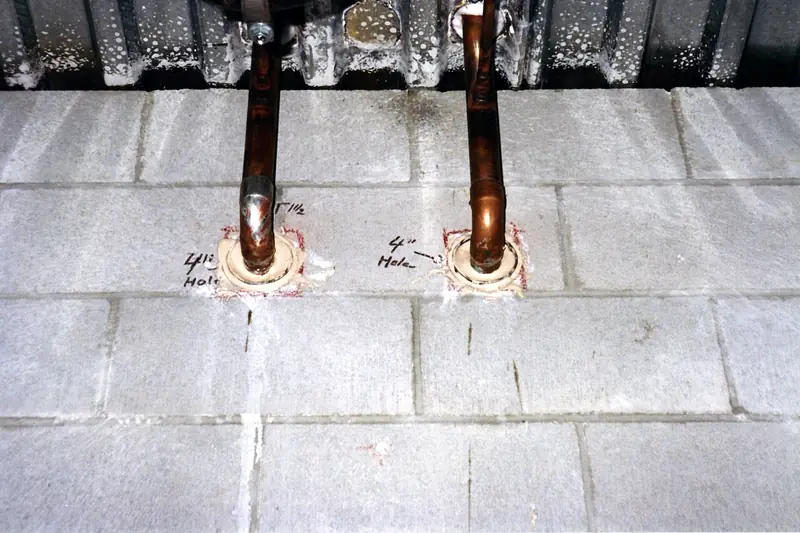
Crews open the wall where the pipe runs, swap the old line for a new one, and close the wall again. The part you will remember is everything around that: dust, strangers, days planned around the water, and a patch that may or may not look like the wall you had.
What follows is a general picture of how these projects are commonly described, not a study or a rule. Buildings differ, so get your building's notice and restoration terms in writing, and ask the project manager for the schedule on your line.
How it commonly goes, from your side of the wall
- A written notice arrives, often organized by riser line, since units stacked above each other tend to go together.
- Someone surveys your unit to see which walls, cabinets and fixtures sit in the way.
- You clear the work areas, and crews commonly cover floors and put up dust protection.
- Walls or ceilings get opened at the pipe, often behind the kitchen sink, vanity or tub.
- Staff or the contractor shut down the line on announced dates, and the new pipe goes in and gets tested.
- Any required inspection happens, and the wall gets closed.
- Patching and finishes follow under whatever terms your project set.
What has to move, and when?
Commonly that means emptying the cabinets under sinks and any closet that backs onto a pipe wall, taking down what hangs on those walls, and shifting furniture to leave a working path. Cover or box what you can't move, since drywall dust travels. Take dated photos of every affected wall and floor before the first day.
What happens to the tile?
Ask this first. Tile is hard to patch invisibly, and old tile can be impossible to match. Ask whether the crew can reach the pipe from behind, through a closet or adjoining wall, and whether an access panel is an option. If you have spare tile from the original job, tell the project manager and keep it safe.
| In the way | What commonly happens | Ask, in writing |
|---|---|---|
| Tile wall | Tile removed around the opening | Who supplies replacement tile, and what if it doesn't match? |
| Vanity or cabinets | Pulled out, or the back cut for access | Who removes and reinstalls them, and who pays for damage? |
| Your upgrades | Often treated apart from the building standard | Is restoration limited to the original finish? |
How does daily life work with the water going off?
Ask which fixtures each shutdown affects, since one line may feed only one bathroom. Store what you need for drinking and flushing, and see how planned building shutdowns work for the rest.
When water returns, it may be cloudy or full of sediment. Denver Water's advice after an outage is to run cold water until it clears, and NYC's is the same before you drink or cook with it. Then clean your faucet aerators, which is a common place for debris to end up.
Are new shutoff valves part of the job?
Ask, because this is the one upside you can touch. Projects commonly add or replace valves where your branch leaves the new line, and it is worth learning which ones are yours to turn before the walls close.
If you own
You are the one to negotiate restoration terms, so ask before work starts. Sign nothing that waives finish work until you have read it, and do a walk-through with photos when the crew says it is done.
If you rent
Notices may go to your landlord first, so ask for a copy. Moving your things and any rent question during days without a bathroom are matters for your lease and state law, so raise them in writing before the work starts. Keep a list of anything damaged, and see what your own policy does.
The short of it
Expect open walls, planned shutoffs and patching, and expect the terms to vary. The written notice and restoration terms matter more than anything anyone tells you in the elevator.
Asked next
Does an owner have to let the crew in?
Declarations often give the association access to reach common elements, with notice except in emergencies. Check the clause: read the access and maintenance provisions, and ask for a schedule that names the dates. If you can't be there, agree in writing on who holds the key and who supervises.
What if they find a problem with the unit's own plumbing behind the wall?
Ask for it in writing, with photos, and find out who is responsible before approving anything extra. Older branch lines or past unpermitted work can turn up. Whether the fix is yours depends on the declaration's split of responsibility.
What about old paint or insulation being disturbed?
It is a fair question in an older building. Ask what testing was done before walls are opened and how dust will be contained, especially if a child or someone with breathing problems lives there. The answer should come from the project manager, in writing.
Read it yourself
- California Civil Code 4775: temporary relocation costs, California only, archived copy of the official page, captured September 14, 2026, read Nov 3, 2026.
- Florida Statutes 718.111: reconstruction absent an insurable event, Florida only, read Nov 3, 2026.
- Denver Water, interruptions in service: running cold water after an outage and cleaning aerators, read Nov 3, 2026.
- NYC Department of Environmental Protection, water shutoffs: running water clear and cold, read Nov 3, 2026.