I smell gas in the hallway or my unit. What should I do?
If you notice a gas smell in your apartment building, leave first, touch no switches, make no calls inside, and call 911 or the gas utility from outside, well away from the building.
Who pays, usually: Nobody needs to decide that yet. Once responders have made the building safe, a repair falls to the utility, the building, an owner or a landlord, depending on where the leak turned out to be.
Filed under Not clear yet
From the Whose Pipe Is It? desk. Sources last checked November 3, 2026. .
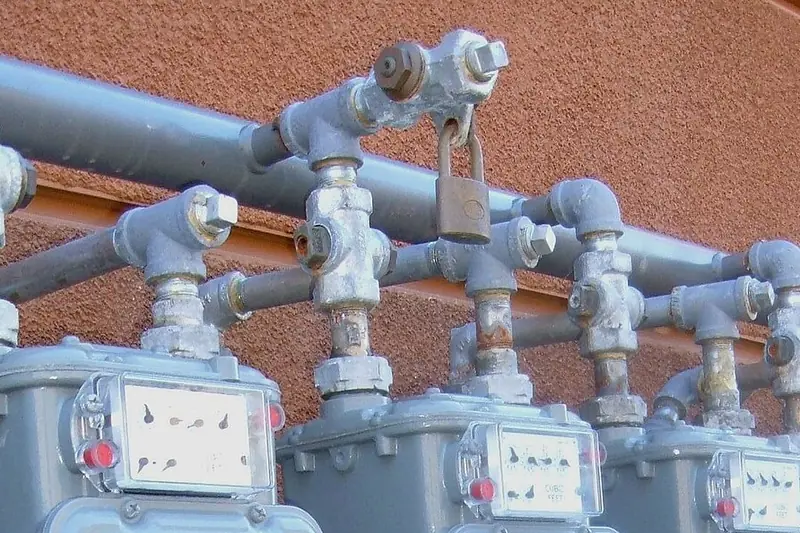
If you are inside right now, stop reading and go.
In this order
- Leave the building now. Bring the people and pets already beside you, and do not stop to search or pack.
- Touch nothing on the way. That means no lights, no appliances, no stove knobs and no gas valves, and an elevator button counts as a switch.
- Keep your phone unused until you are outside and well away from the building.
- Call 911 or the gas utility from there.
- Say the address, where you noticed the smell and whether anyone may still be inside or unable to leave alone.
- Stay out until responders say you can go back.
Why so strict about switches and phones?
Because a spark can be enough. Con Edison says to leave the area right away and call once you are safe, and it lists telephones, ovens, household appliances and even flashlights among the things not to use. National Grid tells all occupants to leave at once without using the telephone or light switches. Washington Gas says to move to a safe location and call 911, and includes cell phones in its list.
Hallway or unit, does it matter?
Not for what you do first. The response is the same wherever you notice it: leave, then call from outside. A hallway smell may start anywhere in the building, so do not try to trace it. Some appliance manuals suggest calling from a neighbor's home, but in a shared building that may be in the same gas space, so go outside.
What happens after the all-clear?
Tell building staff once you are outside and the emergency call has been made. After responders clear the building, any work on a gas water heater, including the burner, gas valve, relighting and venting, is for licensed pros. If you have lost hot water, the hot water page sorts out who to call, and a heater kept in a closet has its own rules. Owners and renters alike can sort out whose problem it is later.
The short of it
Leave first, with no switches and no phones inside. Call 911 or the gas utility from outside, and only go back when responders say so.
Asked next
Should you call the building manager first?
No. Leave first, then call 911 or the gas utility from outside. The manager can hear from you after that call.
What if the smell is faint or seems to have gone?
Leave anyway, then call 911 or the gas utility from outside. National Grid warns against relying only on your sense of smell. Let responders decide it is nothing.
Should you warn the neighbors?
Leave first and call from outside, without going floor to floor. Tell responders about anyone who may still be inside. They can clear the building far more safely than you can.
What if the smell might be sewer and not gas?
Treat it as gas. Leave first, use no switches or phones inside, and call 911 or the gas utility from outside. Sorting out the difference can wait until you are safe.
Read it yourself
- Con Edison, gas leak FAQ: leave immediately, call once safe, what not to use, read Nov 3, 2026.
- National Grid, report a gas emergency: all occupants leave, no telephone or light switches, smell not to be relied on alone, read Nov 3, 2026.
- Washington Gas, natural gas safety: move to a safe location, call 911, no lights or phones, read Nov 3, 2026.