Do I need permission to remodel my condo bathroom?
Who pays, usually: You normally pay for your own remodel; the board or manager usually decides whether the work may go ahead, and the local building department decides whether it needs a permit.
Filed under Probably yours
Condo bathroom remodel permission is usually needed once the job touches plumbing, waterproofing or floors, though paint and a new mirror often need nothing; your association's documents draw the line.
From the Whose Pipe Is It? desk. Sources last checked November 3, 2026. .
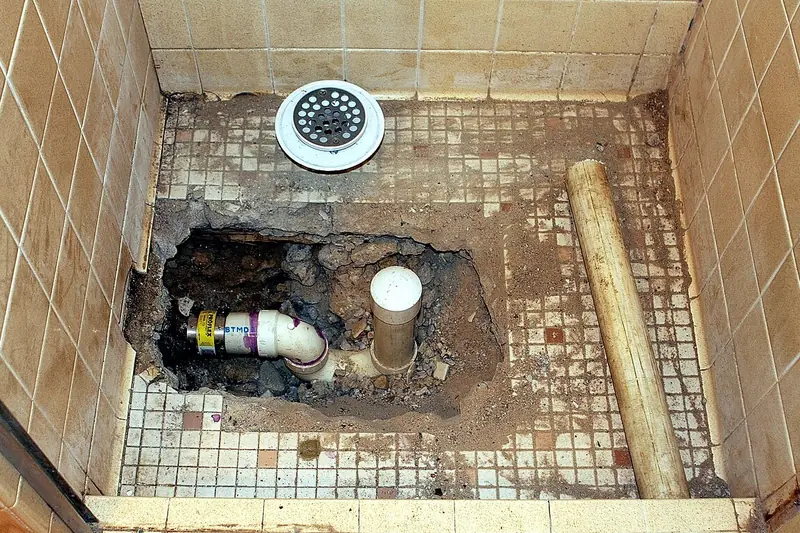
Paint, a mirror, a towel bar: most buildings don't care. Open a wall, change a shower valve or lift a floor and expect to ask first.
There are two separate yeses here, and people often get one and forget the other. The association says whether the work may happen in this building. The building department says whether the work needs a permit under local code. One doesn't stand in for the other.
Why does the board care what happens in your bathroom?
Your bathroom floor is someone else's ceiling, and your pipes branch off lines other units share. A shower pan that fails doesn't stay in your unit. A plumber who needs a riser shut down takes water from every home on that line, and only staff should do that.
| The job | What it touches | Who usually gets asked |
|---|---|---|
| Paint, mirror, accessories | Surfaces only | Often nobody, though quiet hours still apply |
| New toilet or faucet in the same spot | Fixture connections, sometimes a building water shutdown | The manager, often; a plumber if you aren't handy |
| New shower valve | Pipes inside the wall | Association, licensed plumber, possibly a permit |
| New tile floor or shower pan | Waterproofing and the sound path to the unit below | Association, and often the building department |
| Moving a fixture | Drains, vents, possibly the slab | Association, plumber, building department; a much harder request |
What does an association usually ask for?
Ask the manager for the current form before you pay anyone a deposit. Many associations want some version of this:
- A written description of the work, with drawings if anything moves.
- The contractor's license and proof of insurance.
- Copies of any permits.
- Work hours and elevator bookings.
- A date for any water shutdown, arranged through staff.
- A say on floor underlayment, because hard floors carry sound.
- Sometimes a signed alteration agreement and a deposit.
Read that agreement slowly. Some make you responsible for later leaks from the new work, and some pass that duty to the next owner. The alterations article of your declaration and the building's rules sit behind that form, so read them too.
Do you need a permit as well?
Ask your building department, and ask early. The only local rule this page can quote is New York City's, and it applies only there: the city's Department of Buildings says replacing an existing fixture is minor work that could be done without a work permit, while other listed work is reserved for a Licensed Master Plumber. Your town may draw that line elsewhere, and a licensed local plumber will usually know.
What will the inspector and your plumber look at?
Two items come up often. The plumbing code text in both North Carolina and New York City requires a shower valve to be balanced-pressure, thermostatic or a combination that can be limited so it won't go above 120 degrees. That matters more in a building, where other people's water use can swing your shower's temperature.
The second is the shower pan. Code text displayed for North Carolina and New York City calls for the liner to be tested, and the test fills it to at least 2 inches at the threshold for at least 15 minutes. Ask your plumber to schedule it before any tile goes down, and ask the manager whether the building wants to see it.
Does your insurance change after a remodel?
It can. Washington's insurance regulator describes three master policy types: all-in, all-in excluding improvements, and bare walls. New York's regulator says an HO-6 generally covers alterations, fixtures and improvements. Those two facts together are why you tell your agent about the new bathroom and ask whether your limit still fits. The HO-6 page goes further.
If you own
Get the association's approval in writing before work starts, and keep it with the permit, the plumber's invoice, the pan test record and photos of open walls. Those papers help if a leak turns up years later.
If you rent
This is the landlord's decision, and in a rented condo the landlord may need the association's approval too. Get any yes in writing, including who pays and who owns the result. Don't spend your own money expecting to be repaid on a spoken promise.
The short of it
Cosmetic work rarely needs a yes. Anything behind the wall or under the floor usually needs two: one from the association and, often, one from the building department. Get both on paper first.
Asked next
Can you swap a toilet or faucet without telling anyone?
Often the rules let you, but check, because the building may need to schedule water off and may have its own requirements for contractors. If the shutoff under the fixture works, a like-for-like swap is smaller news than anything inside a wall. A short note to the manager costs nothing.
What if the last owner remodeled without approval?
You may inherit the question, and possibly the problem. Ask the manager what is on file for your unit. If the board makes a demand, take it to a lawyer licensed in your state.
Who shuts off the water for your plumber?
Your plumber can usually close the small valves that serve your fixtures. Anything larger, including riser valves, is for building staff, who should schedule it and warn the other units.
Read it yourself
- New York City Department of Buildings, plumbing project requirements: New York City fixture replacement and Licensed Master Plumber wording, read Nov 3, 2026.
- IPC 2021 as adopted by North Carolina, chapter 4: shower valve types, 120 degree limit and liner testing, code text as displayed by a third-party code site, read Nov 3, 2026.
- IPC 2021 as adopted by North Carolina, chapter 3, section 312.9: shower liner test depth and time, code text as displayed by a third-party code site, read Nov 3, 2026.
- NYC Plumbing Code 2022, chapter 4: New York City shower valve section and liner test, code text as displayed by a third-party code site, read Nov 3, 2026.
- California Civil Code 4760: improvements inside a separate interest, archived copy of the official page, captured Oct 19, 2023, read Nov 3, 2026.
- Florida Statutes 718.113: material alterations of common elements, read Nov 3, 2026.
- Washington Office of the Insurance Commissioner, how condo insurance works: the three master policy types, read Nov 3, 2026.
- New York DFS homeowner and tenant guide: what an HO-6 generally covers, read Nov 3, 2026.