Can I move a toilet or sink in my condo?
Who pays, usually: The owner who wants the move normally pays for it; the board usually decides whether shared drains, floors or walls may be touched, and later trouble from the work may come back to that owner.
Filed under Probably yours
You can sometimes move a sink in a condo a short way, but when you move a toilet the drain, vent, slab and unit below all get a vote, and so does your board.
From the Whose Pipe Is It? desk. Sources last checked November 3, 2026. .
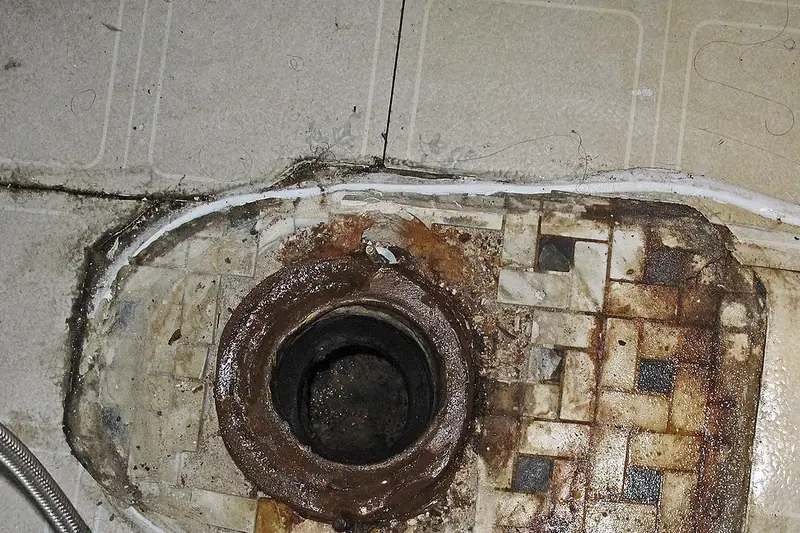
Water will go almost anywhere you ask it to, because it arrives under pressure. Waste won't. A drain has to run downhill to a fixed stack, and that one fact explains most of the answer.
| The move | What stands in the way |
|---|---|
| Sink shifted a short way along the same wall | Usually room for the drain slope, and a vent that still works |
| Sink or vanity across the room | Drain slope, a new vent route, and opening walls or floor |
| Shower or tub to a new spot | The drain under the floor, waterproofing, and the ceiling below |
| Toilet to another wall | A large drain with little room for slope, plus the slab or the neighbor's ceiling |
Why is the toilet the hard one?
It has the largest drain in the room, and that drain needs a steady fall all the way to the stack. In a concrete building it may run through the slab or hang in the ceiling of the unit below. In either case you are asking to work in a space that may not be yours. A slab is often a common element, and a neighbor's ceiling is plainly someone else's home.
The stack stays where it is, and each extra foot of run uses up height you may not have.
What about the vent?
Each new location still needs a trap and a working vent. The plumbing code text displayed for North Carolina describes the job of vent piping as permitting "the admission or emission of air", and requires a trap seal of 2 to 4 inches. Get that wrong and the fixture may work on day one, then gurgle or let sewer smell through. Those vents are often tied to other units' lines, so a shortcut can reach beyond your bathroom.
What would a proposal the board can say yes to look like?
Before you ask the board
- Read the definition of common elements and the alterations article in your declaration, so you know which spaces you'd be working in.
- Ask the manager for plans showing stack and vent locations.
- Hire a licensed plumber to look on site. If the slab is involved, expect the board to want an engineer's view too.
- Get a drawing showing the old and new routes, the slope, the vent and any work outside your unit's boundaries.
- Ask the building department what permit applies. New York City restricts listed plumbing work to Licensed Master Plumbers; elsewhere, ask locally.
- Talk to the owner below if any work touches that ceiling.
- Submit it all, with the contractor's insurance, and wait for written approval before paying a deposit.
Keeping the toilet where it is and changing everything else is often the better plan. If your goal is really about the room, a remodel in the same footprint is a far easier request.
If you own
You're asking for something, so expect to carry the risk. Ask who pays if the new line leaks later, who has to maintain it, and whether a future owner takes on that duty. Have a lawyer licensed in your state read any agreement that binds the unit.
If you rent
Treat this as not your project. Moving a fixture is the landlord's decision and possibly the association's too. Don't let anyone start work on your say-so.
The short of it
A short sink move may be doable. A toilet move depends on the drain route, and that often means the slab or the unit below. Bring the board a plumber's drawing, not just an idea.
Asked next
Can an upflush toilet get around the drain problem?
Those units pump waste to a higher or farther drain, so they ease the slope issue, not the rest. They still need a drain connection, a vent and power, and the association and code still have their say. Ask a licensed plumber and your building department before buying one.
Can the board refuse even if the code allows it?
Often yes. A code sets a minimum for how work is done, while the declaration and rules decide what happens in this building. Whether a refusal holds up is something to ask a lawyer licensed in your state.
Why was a neighbor allowed to move a toilet?
The units may not be built alike, or a different board may have decided under different rules. Ask the manager what was approved and why.
Read it yourself
- IPC 2021 as adopted by North Carolina, chapter 9, section 901.2: the purpose of vent piping, code text as displayed by a third-party code site, read Nov 3, 2026.
- IPC 2021 as adopted by North Carolina, chapter 10, section 1002.4: trap seal depth, code text as displayed by a third-party code site, read Nov 3, 2026.
- Florida Statutes 718.113: material alterations of common elements, read Nov 3, 2026.
- California Civil Code 4760: improvements inside a separate interest, archived copy of the official page, captured Oct 19, 2023, read Nov 3, 2026.
- New York City Department of Buildings, plumbing project requirements: Licensed Master Plumber wording for New York City, read Nov 3, 2026.