Flood, leak or sewer backup: which insurance applies in a condo?
Who pays, usually: It follows the water's cause and path: the association's policies for building damage, your HO-6 or renters policy for your share of a leak, and flood cover only if someone bought it.
Filed under Not clear yet
Condo flood insurance, a leak and a sewer backup are three separate questions, because policies sort water by where it came from, not by how much damage it did or how wet the carpet got.
From the Whose Pipe Is It? desk. Sources last checked November 3, 2026. .
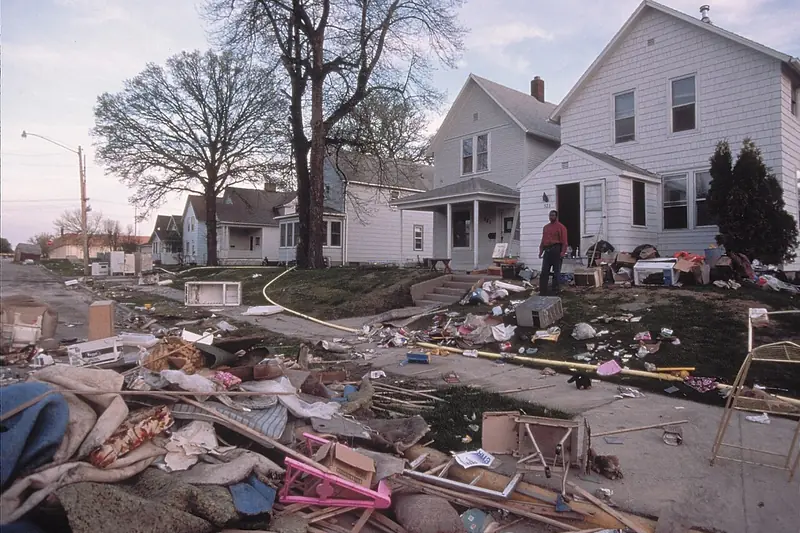
Trace the water backward, then pick the policy. A burst pipe on the ninth floor and a river in the lobby can ruin the same carpet and land under entirely different contracts. Adjusters will ask where it began, so you should ask first.
| Where it came from | Usual first stop | Common trap |
|---|---|---|
| A pipe, fixture or appliance indoors | Master policy and HO-6 or renters | Gradual leaks are often not covered |
| Up through a drain, toilet or sump | HO-6 or renters, if it has a backup add-on | Standard policies may not include it, and federal flood often won't either |
| From outside, over land, across properties | Flood policy, if one exists | Home policies generally exclude it, and new flood cover has a wait |
What counts as a flood, legally speaking?
Policy language defines it, and it is narrower than everyday speech. The National Flood Insurance Program's Dwelling Form describes a "general and temporary condition of partial or complete inundation of two or more acres of normally dry land area or of two or more properties (one of which is your property)". That is the core of the definition, though the form goes on to name other causes such as mudflow.
So water pouring through your ceiling from a broken supply line is not a flood in this sense, however much it looks like one. Both NFIP forms also exclude water damage from conditions within the insured's control or confined to the dwelling, and they name broken water or sewer lines as an example. Those events belong in the world of ceiling leaks and who pays.
Who holds flood insurance in a condo?
Possibly the association, possibly you, possibly nobody. FEMA has two forms that matter here:
- Residential Condominium Building Association Policy (RCBAP). Issued to an association on behalf of the association and its owners. It insures the building. Its optional personal property cover is for property owned in common or by the association, so it isn't there for your couch.
- Dwelling Form. Issued to homeowners, renters and unit owners. This is how you insure your own contents, and it can also carry building cover for your unit.
Don't assume your building carries flood cover. Fannie Mae requires an RCBAP or equivalent for attached condo buildings in a Special Flood Hazard Area, with listed exceptions, but that is a lending rule, not a promise about your building. Ask the board or manager whether the association has flood cover, and for the limits and the deductible.
If you buy a Dwelling Form as a unit owner, the two can overlap. The Dwelling Form says no more than $250,000 may be paid in combined benefits for a single unit under it and the RCBAP. The NFIP's brochure, from an archived copy captured October 7, 2026, lists up to $250,000 building and $100,000 contents for a condo unit, and contents only, up to $100,000, for a rented residence.
The storm pushed sewage up the drain. Which is that?
This is the awkward one. The NFIP forms exclude water that backs up through sewers or drains, or overflows from a sump, or seeps in, "unless there is a flood in the area" and the flood is the proximate cause. So a backup on a dry day generally isn't theirs. Backup during a real flood may be, and the adjuster will look at the cause.
Meanwhile, home policies often need a backup add-on. New York's regulator warns that a sump pump failure caused by a flood is likely to fall between policies, with neither flood nor homeowners cover alone likely to pay. Read both forms, and ask your agent directly how they would handle that exact sequence. First, though, get clear of sewage.
Can flood cover be bought when the forecast turns bad?
Often not in time. FEMA says "There is a 30-day waiting period before new policies go into effect", and there are exceptions, for instance around certain loans. Buy it on a calm day if you are going to buy it.
If you own
Ask three things this week: does the association carry flood cover, what is its deductible, and does your HO-6 have a water backup add-on? Washington's regulator lists flood among the things condo insurance doesn't cover, and New York's says the same of standard unit policies. Then decide about a Dwelling Form with your agent.
If you rent
Your landlord's flood cover, if any, is not for your things. Renters can buy NFIP contents cover alone, and it is separate from your renters policy. If you live below grade or on the ground floor, ask your agent about both flood and backup cover.
The short of it
Name the water first: indoor pipe, backup or flood. Then check each policy for that cause, and find the gaps while the floor is dry.
Asked next
Does the association's flood policy cover my furniture?
Usually not. The RCBAP's personal property cover, when bought, applies to property owned in common or owned by the association. Your furniture needs your own contents cover under a Dwelling Form.
Can someone on a high floor buy flood contents cover?
The Dwelling Form is issued to unit owners and renters, and the NFIP sells contents cover alone. How it responds depends on where the contents are and how the building was damaged, so ask an agent before paying.
Is a burst pipe during a hurricane a flood?
Not on that fact alone. It depends on what caused the damage and what your policies say, and the storm may bring wind, rain and flooding all at once. Note how the water entered, take photos, and tell each insurer.
Read it yourself
- FEMA, flood insurance forms: who each NFIP form is issued to, read Nov 3, 2026.
- NFIP Dwelling Form: flood definition, backup wording, assessments, read Nov 3, 2026.
- NFIP RCBAP form: association cover and personal property, read Nov 3, 2026.
- NFIP flood insurance brochure: cover limits and timing, archived copy of the official page, captured October 7, 2026, read Nov 3, 2026.
- FEMA, 2025 flood insurance release: the waiting period, read Nov 3, 2026.
- New York Department of Financial Services, homeowners and tenants guide: flood and backup gaps, read Nov 3, 2026.
- Washington Office of the Insurance Commissioner, how condo insurance works: flood excluded from condo policies, read Nov 3, 2026.
- Fannie Mae Selling Guide B7-3-06: RCBAP requirement for certain mortgaged buildings, read Nov 3, 2026.