The building wants to replace its risers. What should I ask before paying?
Who pays, usually: All the owners together, through reserves, a loan or assessments, because risers are usually common elements; your declaration and state law decide how your share is figured.
Filed under Probably the association's
Before paying a condo special assessment for riser replacement, ask what the job covers, why reserves fall short, how your share was figured, who restores your walls and what it does to a sale.
From the Whose Pipe Is It? desk. Sources last checked November 3, 2026. .
Two questions are tangled up in that assessment letter: does the building need this work, and is your share of it right? The second usually has the firmer answer, so you may get further with it. The first still deserves evidence, since you are paying for it.
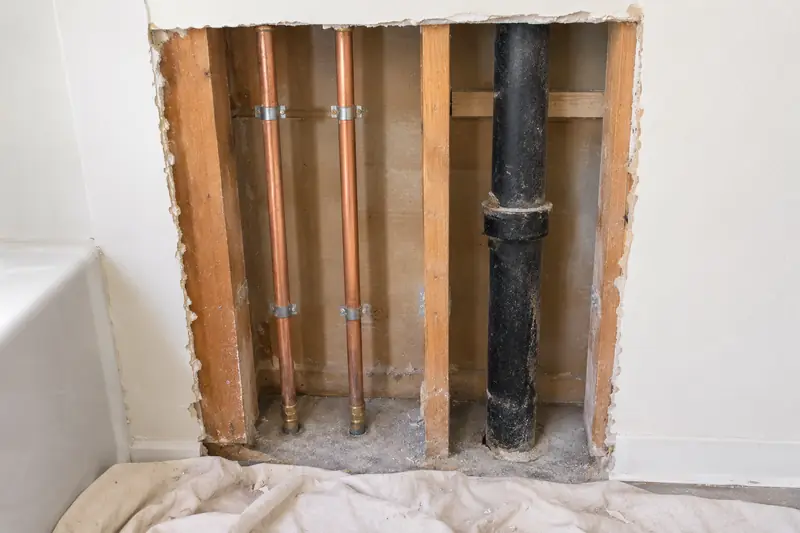
Risers carry water to more than one unit, and stacks carry it away, so in many buildings they are common elements. That is why an owner whose bathroom has never dripped often gets the same kind of bill as the owner whose ceiling came down. Your declaration's definition of common elements is the place to confirm it, along with where your own branch lines start.
What evidence should the board be able to show?
Ask what prompted this now. A sensible answer points to something you can read: an engineer's or plumber's report, a log of leaks by line, a pipe section that was cut out and examined, a reserve study that flagged it. Age alone is a weaker argument, since pipe life varies and this site found no official figure for it, so ask how the conclusion was reached.
Pin down the word "riser" too. People use it for supply lines, hot water return lines and drain stacks, and a project may cover one, two or all three. A bid that sounds cheap may simply be for less pipe.
| Ask | Why it matters | Where the answer should be |
|---|---|---|
| Which lines are in scope: cold, hot, return, drain, branches, valves? | Bids and promises only compare if the scope does | Engineer's scope, contract |
| Why don't reserves cover it? | Tells you whether this bill is the last one | Latest reserve study, budget |
| How was my share calculated? | Most errors you can catch yourself live here | Assessment article and percentage schedule in the declaration |
| What happens if the job runs over or owners don't pay? | You may be billed again | Board resolution, loan terms if any |
| Who restores opened walls, tile and finishes, and to what standard? | Often the largest surprise inside your unit | Contract, owner notice, maintenance article |
| Did this need an owner vote? | Board powers vary | Declaration, bylaws, state law |
Ask that last one early. Limits on board power differ by state and by document, so ask which provision the board relied on. A board that has done its homework can answer in a sentence.
What if my pipes are fine and the bill stays unpaid?
That is a risky way to make the point. The assessment article in your declaration says what follows non-payment, and it often includes late charges, interest and collection steps. Dispute the amount or the process in writing, ask about installments, and talk to a lawyer licensed in your state before withholding anything.
Will this get in the way of a sale or refinance?
It may. Fannie Mae's Selling Guide doesn't name risers or plumbing in its list of critical repair examples. It does tell lenders to review each special assessment's purpose, approval status, amounts and expected payoff, and it lists water intrusion and potentially damaging leaks among the conditions it looks at.
Connecting those rules to your project is this site's inference, not Fannie Mae's wording: a riser job with a leak history or a large assessment may draw questions from a lender. Whether it changes a loan depends on the facts, and isolated damage to a few units is treated differently. Fannie Mae is also only one investor. If you plan to sell or borrow soon, ask the loan officer early and keep the board's documents ready.
Before the due date
- Save the notice and write down the amount, due dates and stated purpose.
- Ask in writing for the report behind the project, the scope, the bid summary and the reserve study.
- Check your percentage against the schedule in your declaration, then redo the arithmetic.
- Ask about installments or any association loan, and whether interest applies.
- Read the in-unit restoration terms before anyone opens a wall.
- Raise any objection in writing before the money is due, and get legal advice if the amount justifies it.
If you own
The bill and the paperwork are yours. Go to the meeting, ask for the documents, and don't assume your unit policy will help: loss assessment cover is written around losses, and a planned replacement may not be one. Ask your agent.
If you rent
The assessment goes to your landlord, not to you. Check your lease for any language passing building costs along, and ask in writing if a notice seems to do that. Your practical concerns are access to the unit, water shutoffs and moving your things.
The short of it
Get the scope, the reason and the arithmetic on paper before you pay or protest. If the sums are large or the answers thin, a lawyer licensed in your state can read the declaration with you.
Asked next
Can a board levy a riser assessment without an owner vote?
Sometimes. It depends on your declaration, your bylaws and your state's condominium law, and the answer can change with the size of the assessment. Ask the board to name the provision it used, then read that provision yourself.
Should a building replace every riser at once or only the bad lines?
There is no single right answer. Doing it all at once may mean one disruptive project, while doing it in phases may spread the cost and repeat the disruption. Ask the engineer to explain both options and why one was rejected.
Will my condo insurance pay a riser assessment?
Don't count on it. Washington's insurance regulator describes loss assessment cover as helping with assessments for losses the community sustained, and it follows whether your own policy covers the cause. A planned pipe replacement may not fit, so ask your agent for an answer in writing.
Who owes the assessment if a unit sells before it is paid?
Your sale contract, the declaration and state law decide. In Florida, a buyer is jointly and severally liable with the previous owner for unpaid assessments that came due up to the transfer of title, so closing agents there look for them. Elsewhere, ask your closing attorney or agent before you sign.
Read it yourself
- Florida Statutes 718.116: use of special assessment funds and buyer liability for unpaid assessments, Florida only, read Nov 3, 2026.
- Florida Statutes 718.112: plumbing in the reserve study list, Florida only, read Nov 3, 2026.
- Illinois 765 ILCS 605/18.4: board duties and the owner petition, Illinois only, archived copy of the official page, captured December 9, 2024, read Nov 3, 2026.
- Fannie Mae Selling Guide B4-2.1-03: lender review of special assessments and critical repairs, read Nov 3, 2026.
- Washington Office of the Insurance Commissioner, how condo insurance works: what loss assessment cover is for, read Nov 3, 2026.