What kind of pipes does an older building have, and should I worry?
Who pays, usually: The association or building owner usually handles shared pipes in older buildings, with costs reaching owners through common charges or assessments; renters usually deal with the landlord, and a unit's own branch lines depend on the documents.
Filed under Probably the association's
Older apartment building pipes can be galvanized steel, cast iron, copper, plastic or lead, and lead is the one that deserves action now; the rest mainly call for finding out what you have.
From the Whose Pipe Is It? desk. Sources last checked November 3, 2026. .
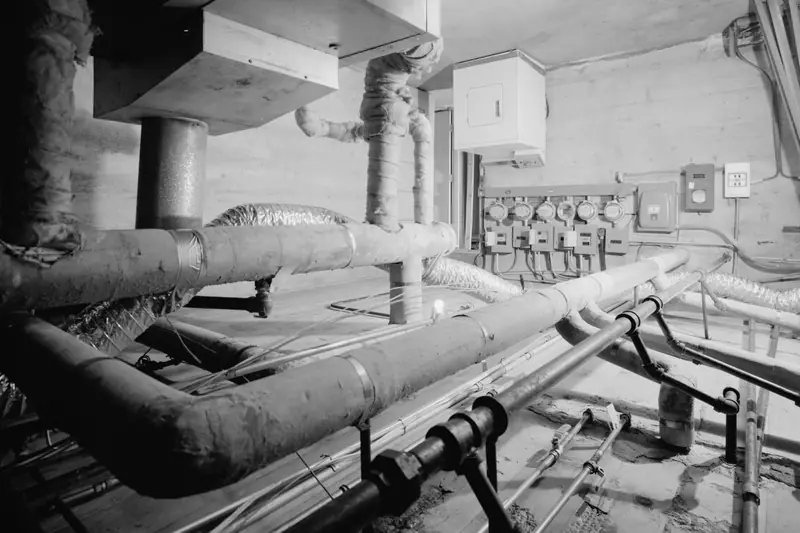
Age alone tells you less than people suggest. Two buildings from the same decade can hold quite different pipes because of what was fixed along the way. There's also less official information than you'd expect: no neutral government figure was found for how long cast iron or galvanized pipe lasts, so this page doesn't give you one, and be careful of anyone who gives a number with confidence.
| Material | Often used for | How to recognize it | What's on the record |
|---|---|---|---|
| Lead | Older service lines, some connections | Dull gray and soft | A 2024 EPA rule has water systems replacing lead pipes |
| Galvanized steel | Older water lines | Gray, threaded joints | EPA: lead particles can attach to its surface |
| Copper | Water lines | Reddish brown, may go green | EPA: solder before 1986 had high lead levels |
| Cast iron | Drains and stacks | Heavy, dark, large | No official life figure found |
| Polybutylene | Water lines, in some buildings from recent decades | Often gray flexible plastic | Class action long past |
| Kitec | Water lines, some newer buildings | Often orange and blue, brass fittings | Settlement closed |
Identifying a pipe by eye is rough at best. Treat this as a way to ask better questions.
Should you worry about lead?
Yes, enough to do something, and it's the one item here with a health reason attached. EPA says solder made or installed before 1986 contained high lead levels, and federal law banned lead pipes and solder in installation or repair after June 1986. "Lead free" still doesn't mean none: today's limit is a weighted average of 0.25% across wetted surfaces, and 0.2% for solder and flux.
Under EPA's 2024 Lead and Copper Rule Improvements, drinking water systems are required to identify and replace lead pipes within 10 years. That rule puts the duty on water systems and not on your building owner, and it doesn't touch lead solder in the walls.
Meanwhile, there are three things you can do without anyone's permission. EPA suggests cleaning your aerator, since lead particles can collect there, and running your water before use. If you want a filter, check its label for NSF/ANSI Standard 53 and a lead reduction claim. Ask your water utility about testing as well, and whether it knows what your building's service line is made of.
What about polybutylene?
It's a gray or blue plastic once used for water lines, and it was the subject of large lawsuits in the 1990s. Don't count on any money from those now. If you find it in your unit, have a plumber look at it and ask your insurance agent how it's viewed.
And Kitec?
The official settlement site says the claims deadline passed, with the date given as January 9, 2020. Its update of July 9, 2025 says settlement payments have been issued and the stale date has passed. So that's closed too. Finding Kitec still matters for planning and for what your insurer or a buyer asks, but there is no claim left to file under that settlement.
Is cast iron or galvanized going to fail soon?
Nobody can tell you from the age. Old galvanized lines are often described as narrowing from the inside and old cast iron drains as corroding, but how fast depends on the water, the use and past repairs, and we found nothing official that puts a number on it. Look for signs instead: repeat leaks on the same line, falling pressure at one faucet, rusty water, slow shared drains or stains near stacks.
How do you find out what you've got?
Ask for records before you ask for opinions. Good things to request from the manager:
- Past plumbing reports, repair logs and any camera inspections of the drains.
- The reserve study's plumbing line, with its assumptions.
- Permit records for past work, through the building department.
- Board minutes that mention leaks or riser plans.
You can also look wherever a pipe shows: under the sink, in the water heater closet or through an access panel. Take a photo, and ask a plumber or staff what it is. Keep in mind that what's visible at the stop may not match what's behind the wall. A short stub can be new, with old pipe a foot further in. For how the risers and stacks run, the plain version is on its own page. Never open, cut or disturb those lines yourself.
If you own
Before buying, or now, read the minutes and the reserve study. Check who is responsible for the branch lines to your unit, because an older line that serves only you could be your cost in some buildings. Ask your agent if your insurer cares about pipe type.
If you rent
You don't have to work out the pipes. Tell the landlord about rust-colored water, repeat leaks or weak flow in writing. If lead is your concern, ask what the landlord knows about the building's service line and plumbing, and use a certified filter meanwhile.
The short of it
Lead deserves action now. Everything else deserves records and a plumber's look, and not panic. Old pipe isn't automatically bad pipe, but a pattern of leaks is worth raising with the board.
Asked next
Do older pipes affect getting insurance?
They can. Some insurers ask about pipe type or age, and answers vary by company. Your agent can tell you what your policy or a new one requires. Ask before you assume either way.
Can you have your water tested for lead?
Yes. Ask your water utility whether it offers testing or can name certified labs, and follow the sampling instructions closely. One result is a snapshot, and lead levels can vary with how long water has sat.
Is brown water a sign of old pipes?
It can be, but it also follows shutdowns and work in the street, when sediment gets stirred up. If it clears with cold water, it may be nothing more. If it keeps coming back, tell the building in writing.
Read it yourself
- EPA, sources of lead in drinking water: solder before 1986 and galvanized pipe, read Nov 3, 2026.
- EPA, use of lead free pipes, fittings, fixtures, solder and flux: the June 1986 ban and the lead free limits, read Nov 3, 2026.
- EPA, Lead and Copper Rule Improvements: water systems replacing lead pipes within 10 years, read Nov 3, 2026.
- EPA, basic information about lead in drinking water: aerators and running water, read Nov 3, 2026.
- EPA, filters certified to reduce lead: NSF/ANSI Standard 53, read Nov 3, 2026.
- Kitec settlement, case status: claims deadline, read Nov 3, 2026.
- Kitec settlement, home page: payments issued and stale date, July 9, 2025 update, read Nov 3, 2026.
- Florida Statutes 718.112: study requirement listing plumbing, read Nov 3, 2026.