I hear water running in the wall, even at night. Is that a leak?
Who pays, usually: A running toilet or drip in your unit is usually the owner's or the landlord's. A leak in shared pipe usually goes to the association, and any water damage then follows the declaration and policies.
Filed under Not clear yet
Hearing water running in the wall of your apartment can mean a neighbor, a pump, your own toilet or a real leak, and a few quiet checks at night usually narrow it down.
From the Whose Pipe Is It? desk. Sources last checked November 3, 2026. .
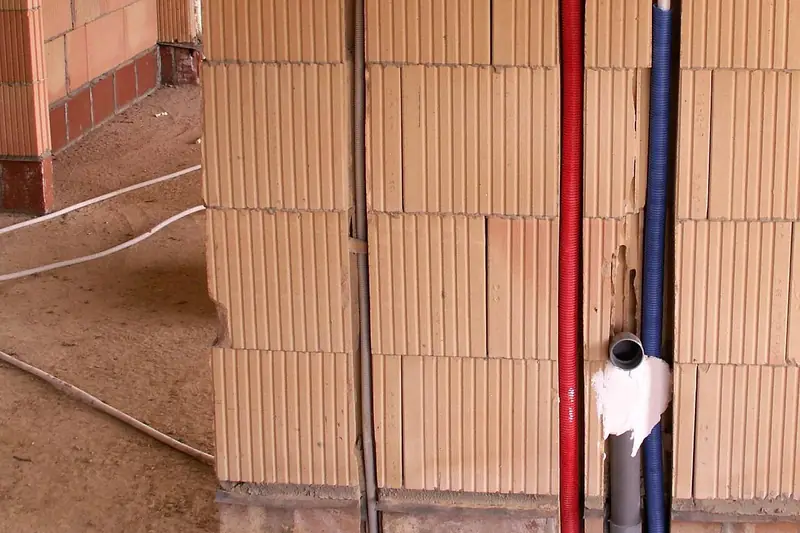
Shared walls carry sound, and the people around you shower at strange hours. Much water noise at night is someone else's ordinary life. What sets a leak apart is that it keeps going, and that it does not stop when anyone goes to bed.
What does the sound itself tell you?
- Bursts of a few minutes, then quiet: likely a neighbor's shower, toilet or appliance.
- A rush down the wall, then nothing: likely a drain or stack doing its job. Risers and stacks run through many buildings near bathrooms and kitchens.
- A low steady hum with no water sound: possibly a booster pump or a hot-water recirculation pump.
- A steady hiss or trickle for hours, day and night: this is the one to chase. It may be a running toilet, yours or a neighbor's, or a leak.
A quiet check, in this order
- Turn off everything in your home that uses water, including the ice maker and any running appliance.
- Put your ear near the toilet tank and each sink cabinet, then listen again at the wall.
- Do EPA's toilet test: a few drops of food coloring in the tank. If color shows in the bowl after 10 minutes, the toilet leaks. Flush soon after so it does not stain.
- Look and feel along the wall, the base trim, under sinks and on the ceiling for damp, staining or soft paint.
- If your home has its own water meter you can reach, take a reading, use no water for a while and read it again. EPA notes that individual metering helps identify leaks in a particular unit.
- Write down when the sound starts and stops, and how long it lasts.
How much water can this really waste?
More than the sound suggests. EPA's figures say one drip per second can waste more than 3,000 gallons a year and an average household's leaks more than 9,300 gallons a year.
- One dripping faucetover 3,000 gallons
- All the leaks in a typical homeover 9,300 gallons
On a single master meter, you may never see that on a bill of your own, and the cost gets divided up instead, as shared water bills explains. If you do see your own bill, EPA's rule of thumb is that a family of four exceeding 12,000 gallons a month in winter could have serious leaks.
Is it worth bothering anyone if nothing is wet?
Yes, if the sound is steady and has lasted days. Early reports matter for insurance too. Washington's and Texas's insurance regulators both say most policies do not cover gradual leaks, so check your own and keep a dated record of when you noticed it and who you told.
If it does turn out to be your toilet, EPA suggests replacing the flapper at least every five years.
If you own
A toilet tank is yours to fix and a flapper is a modest job, with the fixture stop closed first if it turns freely. If the sound is in the wall and not your fixture, report it in writing to the manager and ask them to check the neighbors and the line. Do not open the wall to look without talking to them, as which pipes are yours explains.
If you rent
Report the dye test result or the sound to the landlord in writing, with the dates. Ask the landlord to check adjoining units, since you cannot do that, and keep your message in case damage appears later.
The short of it
Short bursts are neighbors. A steady hiss for hours is worth a dye test, a look along the wall and a written report, even if nothing is wet yet.
Asked next
Could a noise in the wall be a neighbor's running toilet?
Yes, and it is a common explanation for a steady trickle. A running toilet can be heard through a shared wall, and it stops only when someone fixes it. Staff can ask the neighbors to run the same dye test.
Can a plumber find a leak without opening the wall?
Often they can narrow it down by listening, testing and using moisture or thermal tools. Pinpointing the source is the skilled part, and opening the wall may still be needed. Who hires them depends on who is responsible for the line, so check with the manager first.
Why does the sound seem louder at night?
There is less background noise, so it may not be any change in the source. A written log is more reliable than your impression at 3 a.m.
Read it yourself
- EPA WaterSense, Fix a Leak Week: toilet test, flapper, drip and household figures, winter bill check, read Nov 3, 2026.
- EPA WaterSense, Metering technical sheet: individual metering, read Nov 3, 2026.
- Washington Office of the Insurance Commissioner, leaks, water damage and mold: gradual leaks, read Nov 3, 2026.
- Texas Department of Insurance, water damage and mold: gradual leaks, read Nov 3, 2026.