There's a brown stain on my ceiling, but nothing is dripping. Does it matter?
Who pays, usually: Reporting it is free. Any later repair usually follows the source: the landlord for a rental, and for a condo, whoever your declaration assigns that line or roof to, or the association for shared lines.
Filed under Not clear yet
Yes, because a water stain on an apartment ceiling can be an old, finished leak or a slow one still feeding it, and from below they look alike.
From the Whose Pipe Is It? desk. Sources last checked November 3, 2026. .
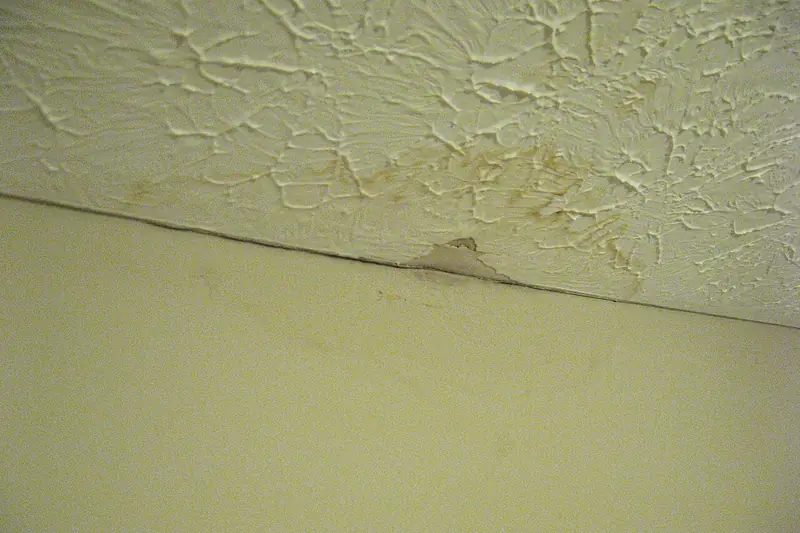
Yes, it matters, and not because a stain is a disaster. It matters because you can't tell by looking whether the water has stopped. A dry-looking ring may be from a leak fixed years ago, or a pinhole above that wets the ceiling a little each morning. The record you make today can matter later.
Why bother reporting a dry stain?
Slow water has an insurance problem. Washington's insurance regulator says most homeowners policies don't cover gradual leaks, even ones you had no way of knowing about. Texas's department says you usually must report water damage hidden from view within days after you first see it. So a dated report beats "it's been there a while" every time.
Florida owners have a further reason. Under 718.111(11)(j)4 of Florida's condo law, an association need not pay as a common expense for a loss an owner knew or should have known about and didn't report until after the claim was settled or denied as untimely. That is Florida only, but the habit travels well.
Date it, then watch it
- Photograph the stain with something for scale, in the same light you can repeat later.
- Outline the edge lightly in pencil, and write the date beside it if you don't mind the mark. In a rental, ask first or rely on photos alone.
- Send the photos to the manager or landlord today, and ask who will check the unit above or the roof.
- Look again after a shower upstairs, after rain, and after a few days. Photograph it each time.
- Note anything new: growth past the pencil line, a darker center, a musty smell.
What makes it urgent?
Growth past your mark means water is still arriving. So does a stain that darkens at the same time of day, or one that shows up after rain, which points away from plumbing and toward the roof or outside walls. Top-floor units should say so when they report it.
Paint or drywall that is soft, bubbling or sagging moves this out of "keep an eye on it" and into "tell them now". Stay out from under a sagging spot. If it starts dripping, the first-hour steps take over. If you suspect it's coming from the unit above, it may help to know how an upstairs leak gets paid for.
Can you just paint over it?
Not yet. Paint hides the only gauge you have. EPA says not to paint or caulk moldy surfaces, and to clean up and dry them first. EPA also lists the top side of ceiling tiles and the back of drywall among places mold can hide, so a clean face doesn't prove a clean ceiling. Once the source is confirmed fixed and the area is dry through, painting is a normal last step, handled by whoever owns that job.
Hearing water at odd hours as well? The running-water page is worth a look.
If you own
Email the manager with your photos and ask them to check above you. The maintenance article of your declaration says who handles the ceiling itself, which may not be who handles the pipe above it, and your HO-6 insurer may want to hear about it if there's damage.
If you rent
Text or email your landlord with a photo, and keep the message. It shows when the condition was reported, which also helps at move-out. Ask before marking the ceiling or doing any painting.
The short of it
A dry stain is a question nobody has answered yet. Report it today, mark it, and let what it does next tell you how worried to be.
Asked next
Is there a way to tell an old stain from a new one?
Often not from one look. A change over time tells you more than color does, which is why the dated photos matter.
The landlord says it's old and won't look. What now?
Put your report in writing and ask when the original repair was done. If the stain grows, send new dated photos and move on to the next steps for a landlord who stalls on a leak.
Could it be condensation instead of a leak?
It can be. EPA notes that moisture collecting on walls or pipes can come from high humidity, and rust on a pipe can indicate condensation. Only someone looking above the ceiling can confirm it, so report it either way.
Read it yourself
- Washington Office of the Insurance Commissioner, Leaks, water damage and mold: gradual leaks, read Nov 3, 2026.
- Texas Department of Insurance, When are water damage and mold covered: reporting hidden water damage within days, read Nov 3, 2026.
- EPA, A Brief Guide to Mold, Moisture and Your Home: hidden mold, painting moldy surfaces, condensation, read Nov 3, 2026.
- Florida Statutes 718.111: unreported losses, paragraph (11)(j)4, Florida only, read Nov 3, 2026.
- FEMA, The ABCs of Returning to Flooded Buildings: sagging ceilings as a hazard sign, read Nov 3, 2026.