Water is coming through my ceiling. What do I do first?
Who pays, usually: Nobody settles that in the first hour. Later it turns on where the water started, your lease or declaration and the policies involved, so for now just report it and record it.
Filed under Not clear yet
With water leaking from the ceiling in an apartment, get clear of wet electrics, tell building staff or the emergency line right away, then photograph everything before you move much.
From the Whose Pipe Is It? desk. Sources last checked November 3, 2026. .
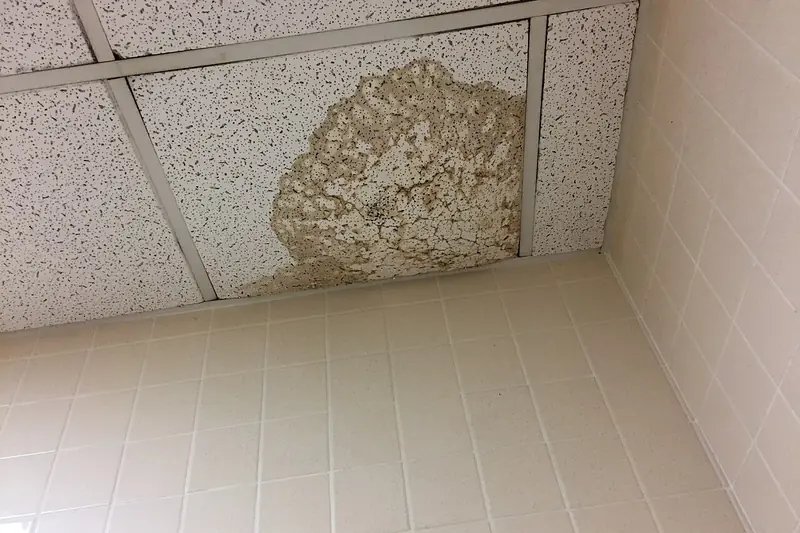
Your job for the next hour is smaller than it feels. You don't have to find the leak, and you probably can't stop it. Water coming through a ceiling usually starts somewhere above you, so the valve under your own sink won't touch it. What you can do is stay safe, get the right person moving, and keep a record.
The first hour, in order
- Get people and pets out from under the wet area.
- Call the building's emergency line, super, manager or landlord. Give your unit number, the room, how fast the water is moving, and whether it is near anything electrical. If you only have an app or email, send it and keep trying by phone.
- Knock on the door above you. A neighbor at home may find a running tub or a burst hose in seconds. If no one answers, tell staff and leave that door to them.
- If the water is coming from a fixture in your own unit, close that fixture's stop, or the unit shutoff if you know where it is and the building says it's yours to use.
- Take photos and video before you move much: the ceiling, the floor, damaged things, and the source if you can see it safely.
- From dry footing, move what you can and set out buckets. Leave anything plugged in near the wet area where it is.
- Tell your insurer today.
Which shutoffs are actually yours?
Checklists written for houses tell you to run to the main valve. In a shared building, that valve feeds other people. Closing the wrong one can cut water to a whole line of units, and it may not even be the line that is leaking.
| Valve | Yours to touch? | What to do |
|---|---|---|
| Stop under a sink or behind a toilet | Yes | Close it if that fixture is the leak |
| Unit shutoff the building says is yours | Yes | Close it if the leak is inside your unit |
| Riser valve, main shutoff, anything in a shared closet or basement | No | Tell staff what you're seeing and let them decide |
| Anything on a sprinkler line | Never | Report it at once |
Not sure what you have? This page on unit shutoff valves is worth reading once things are dry. If the drip is coming from a sprinkler head, go straight to the page on dripping sprinklers.
What if the water looks or smells wrong?
Brown water alone doesn't tell you much, since water often picks up color on its way through a ceiling. A sewage smell is different. Keep everyone clear, stop using your drains, and tell the building it may be a drain line. No plunging, no chemicals, no mopping. The sewage page covers what happens next.
What if nobody answers?
Keep trying every number you have, and leave messages with the time and what you're seeing. If water is reaching anything electrical and you can't raise anyone, call the fire department from a safe place.
What can wait until tomorrow?
Blame can, and so can the bill. Who pays in a condo and who pays for a renter's things get sorted out over days, on paper. Let your insurer see the damage before any permanent repair, and keep receipts for anything you buy to stop it getting worse. The clock that does start today is the one on drying.
If you own
Call the manager or association as well as your unit-owner insurer. The association can start any master policy claim, and your insurer will want to know early. Note who you told and when.
If you rent
Your landlord is the first call, even if you know exactly which neighbor it came from. Follow the call with a short written message and photos, then call your renters insurer about your belongings.
The short of it
Stay dry, stay away from wet electrics, and leave the building's valves to the building. Report it, photograph it, and call your insurer. Everything else can happen on paper later.
Asked next
Should the water to the whole apartment go off?
Only if the leak is inside your unit and the shutoff is one the building says is yours. If the water is coming from above, closing yours changes nothing. It just leaves you without water.
Is it worth calling a plumber yourself?
Usually not first. Building staff can get into the unit above and the shared pipe spaces, and a plumber you hire usually can't. If the source is plainly in your own unit, that changes the answer.
The dripping stopped. Does it still need reporting?
Yes, the same day. Water that stops may have been shut off upstairs or finished draining, and neither tells you the ceiling is fine. The report also fixes the date in writing.
Is it safe to sleep there tonight?
If power is out, the ceiling is bulging or it smells like sewage, ask the building or your insurer before settling in. Some policies help with living costs after a covered loss, so ask about that too.
Read it yourself
- CDC, Reentering your flooded home: shutting off power only from a dry location, read Nov 3, 2026.
- FEMA, The ABCs of Returning to Flooded Buildings: sagging ceilings listed as evidence of structural damage, read Nov 3, 2026.
- Washington Office of the Insurance Commissioner, Filing a condo unit insurance claim: photos, receipts, who to contact, read Nov 3, 2026.
- Texas Department of Insurance, When are water damage and mold covered: telling the insurer quickly, no permanent repairs before it sees the damage, read Nov 3, 2026.
- NAIC, Renting your home: some policies cover living expenses after an insured loss, archived copy of the official page, captured June 16, 2026, read Nov 3, 2026.