My unit leaked into the one below. Am I responsible?
Who pays, usually: Not automatically you. The source, any negligence, your declaration or lease and state law decide it, and your liability cover is usually where any claim against you lands.
Filed under Not clear yet
You are not automatically responsible for water damage to the unit below; it usually depends on what failed, whether anyone was negligent, what your declaration or lease says, and your state's law.
From the Whose Pipe Is It? desk. Sources last checked November 3, 2026. .
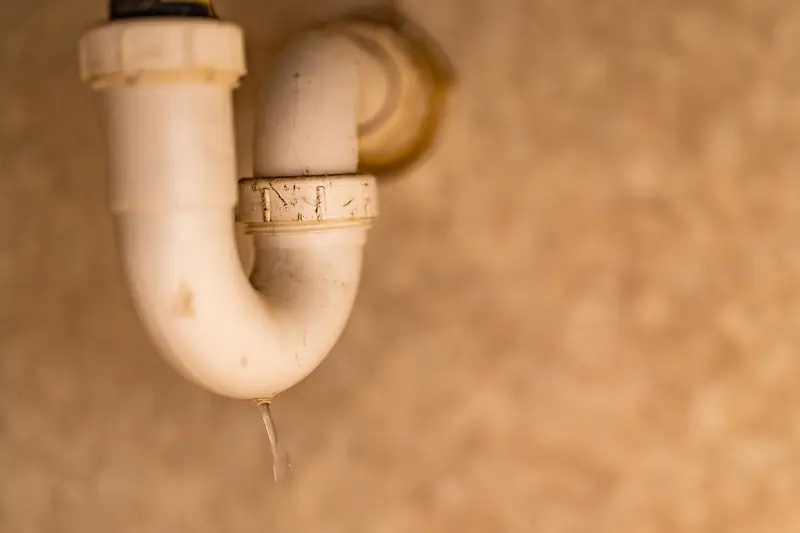
A leak starting in your unit can feel like an admission. On its own, it doesn't settle fault. Water can show up on your floor from a shared line in your wall, and even a failure in your own fixture isn't the same thing as fault. Still, some of this may land on you, so treat today as the day you build the record.
What should you do right now?
If it is still running, close the fixture stop, or your unit shutoff if the building has confirmed that one is yours. Stay out of standing water near outlets or appliances while you do it, and leave risers and building valves to staff. Then tell the building and go knock downstairs. Your neighbor needs to know now, because they have their own first hour to get through.
Be decent and stay factual. Say what you saw and when. You don't yet know the cause, so don't guess at it, and don't promise to pay for anything before you've talked to your insurer.
The record you will wish you had
- Photograph the source if it's safe, and the area around it.
- Keep the failed part. A burst hose or cracked supply line is evidence, and your insurer may want to see it.
- Write down when you noticed, when you shut it off, and who you told.
- Report it to your insurer, and ask specifically about the liability part of your policy.
- Save invoices from whoever finds or fixes the problem, and ask for the cause in writing.
What decides whether it's on you?
Four things, roughly in this order.
Where it started. If the failure is in a pipe serving other units, it is usually a common element, and the conversation moves toward the association. If it is in a line or fixture that serves only you, your declaration decides. Whose pipe it is is the first question to get settled.
Whether anyone was negligent. That is a legal call, not a neighborly one. Expect questions like these: how old was the part, had it leaked before, did you report anything, was the work approved, and was someone home? An overflowing tub is the usual example in insurance guidance. A sudden failure of a part you had no reason to doubt can look quite different.
What your documents say. Some declarations spell out what happens when water escapes from one unit to another. Look in the maintenance article and the insurance article, and check for any rule on insurance you were required to carry or work you were required to get approved.
State law. It varies, and a few examples show how much.
How does insurance usually play out?
The neighbor's own policy typically pays them first. Washington's insurance regulator notes that their insurer may then seek its money from your liability cover, so a letter from another insurance company is a normal step. It doesn't decide anything by itself. Ask your insurer how to respond.
Separately, the association may claim on its master policy, and the deductible may get charged somewhere. Your own damage runs through your HO-6. Gradual leaks are often outside coverage, so a slow one can make for a harder conversation than a sudden one.
If you own
Your HO-6 liability part is the one to ask about, along with any loss assessment cover. Read your declaration's insurance article before you agree to any chargeback, and take a serious sum to a lawyer licensed where you live.
If you rent
Tell your landlord immediately, in writing. If the failure is in the building's plumbing, repair is generally the landlord's job. If your washer hose or your overflowing tub caused it, ask your renters insurer about liability, since renters policies commonly include it. Check your lease too.
The short of it
A leak from your unit is a question, not a verdict. Stop the water, tell people, keep the part, and hand any claim letter to your insurer.
Asked next
The neighbor wants payment right now. Is that required?
Ask your insurer before you agree to pay anything. Paying or promising before your insurer weighs in can complicate things, so tell your neighbor you've reported it and share your claim details. Stay polite, since you'll keep sharing a building.
A chargeback letter arrived from the association. Is that final?
Not necessarily. Ask what provision of the declaration or statute it rests on, and whether you have a right to a hearing. Show it to your insurer, and to a lawyer if it's large.
An old washer hose burst. Does its age count against you?
It may come up. Several makers say five years for replacing hoses, and an adjuster may ask how old yours was. Whether that amounts to negligence depends on your facts and your state.
What would help next time?
Replace aging hoses, learn where your stops are, and consider a leak sensor near the washer and water heater. Turning off the washer valves before a long trip is also what some makers advise.
Read it yourself
- Washington Office of the Insurance Commissioner, Filing a condo unit insurance claim: neighbor damage, liability recovery, governing documents, read Nov 3, 2026.
- Washington Office of the Insurance Commissioner, Leaks, water damage and mold: gradual leaks, read Nov 3, 2026.
- Florida Statutes 718.111: owner responsibility and opt-out, Florida only, read Nov 3, 2026.
- 765 ILCS 605/12: deductible options and required cover, Illinois only, archived copy of the official page, captured May 22, 2025, read Nov 3, 2026.
- Maryland Insurance Administration, condominium FAQs: unit-origin deductible and loss assessment, Maryland only, archived copy of the official page, captured June 8, 2026, read Nov 3, 2026.
- NAIC, Renting your home: liability in renters policies, archived copy of the official page, captured June 16, 2026, read Nov 3, 2026.
- LG washer owner's manual: five-year hose advice, turning off faucets when away, read Nov 3, 2026.
- GE washer manual: five-year hose advice, read Nov 3, 2026.